The signs, in order of how people notice them
1. Sounds at night
Scratching, scurrying or something rolling across the ceiling, usually after dark and before dawn. Roof rats are most active at night.
2. Droppings
Dark, about half an inch, pointed at the ends, along rafters, on top of insulation, in the garage or under sinks. Fresh droppings are dark and soft; old ones are gray and crumbly. Don’t sweep or vacuum them (see attic cleanup for why).
3. Gnaw marks and damage
Chewed wire insulation, flex ducting, wood trim, stored boxes, or gnawed fruit on backyard trees.
4. Tunnels and nests in insulation
Flattened paths and tunnels through blown-in insulation, and shredded nesting material near the eaves.
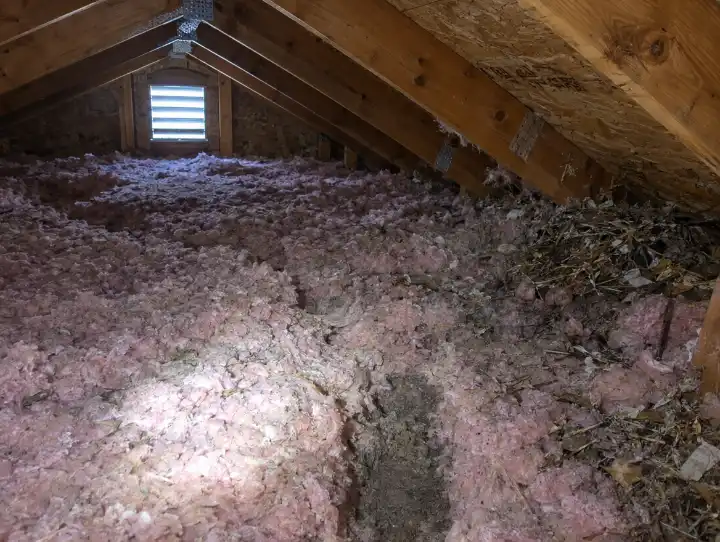
5. Rub marks and smells
Greasy dark smudges along beams and entry holes, and a musty, ammonia-like smell in closed spaces.
6. Sightings outside
Rats running along fence tops, branches or utility lines at dusk.
What about the “5-day mouse rule”?
You may see this phrase online. It isn’t a formal standard from a public-health or extension source, so we don’t rely on it. The practical point is simple: if you see signs of rodents, act quickly, because they breed fast.
What to do first
- Don’t put poison in the attic or walls; a rat can die where you can’t reach it.
- Don’t sweep or vacuum droppings.
- Note where you hear the noise and when, and take photos of droppings or damage.
- Get an inspection that identifies every entry point.
Then see rat removal and rodent proofing, or read about roof rats.